SORTING HAT THEMED COFFEE MAKER: DESIGN, DETAILS & DELIGHT
The morning ritual of brewing coffee has long transcended mere utility. It is a quiet ceremony, a moment of transition between sleep and wakefulness, between solitude and the demands of the day ahead. When an object is crafted to honor this daily practice while simultaneously evoking a deeply resonant cultural symbol, it ceases to function solely as an appliance and becomes an artifact of lived imagination. At the intersection of everyday practicality and narrative enchantment stands the Sorting Hat Themed Coffee Maker. This concept does not merely borrow a visual motif or apply a superficial decal to a conventional machine. Instead, it translates the essence of a legendary artifact into a functional vessel for warmth, aroma, and reflection. By examining its design language, the precision of its engineered details, and the emotional resonance it cultivates, one can appreciate how such an object transforms a mechanical process into a deeply personal experience. The exploration that follows delves into how form, function, and feeling converge within a single domestic object, revealing how thoughtful design can elevate the ordinary into the extraordinary. Through careful analysis, we will uncover how every curve, material choice, and operational nuance works in harmony to create something that feels both familiar and profoundly magical, bridging the gap between myth and the tangible rhythms of daily life.
DESIGN: AESTHETICS AND FORM
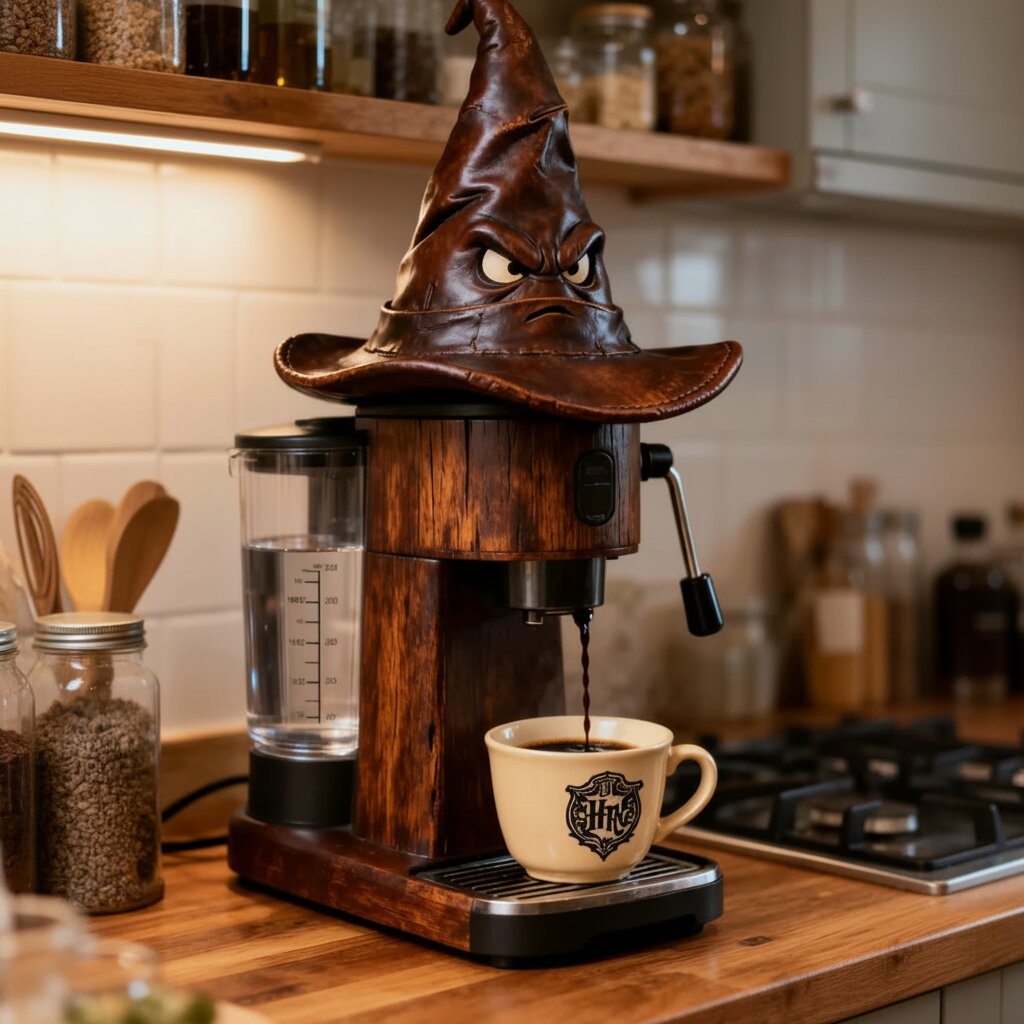
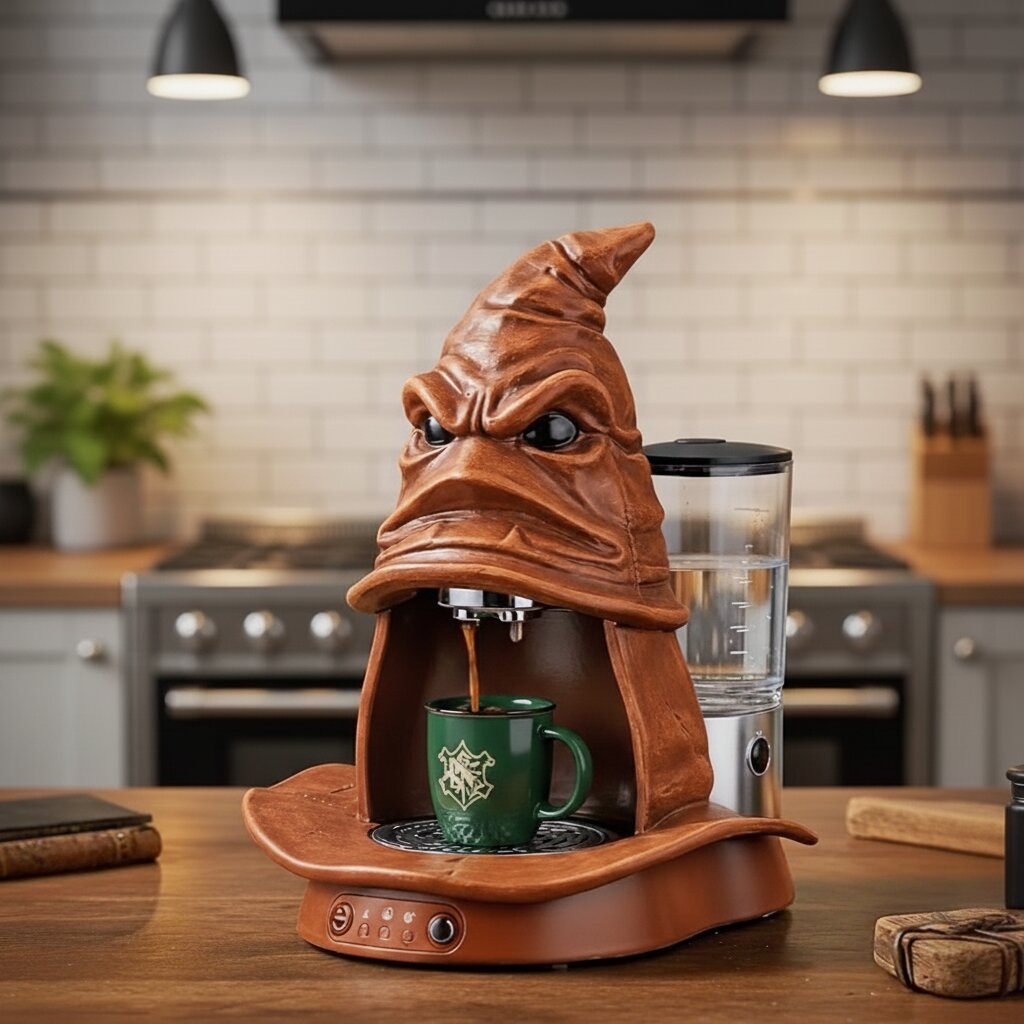
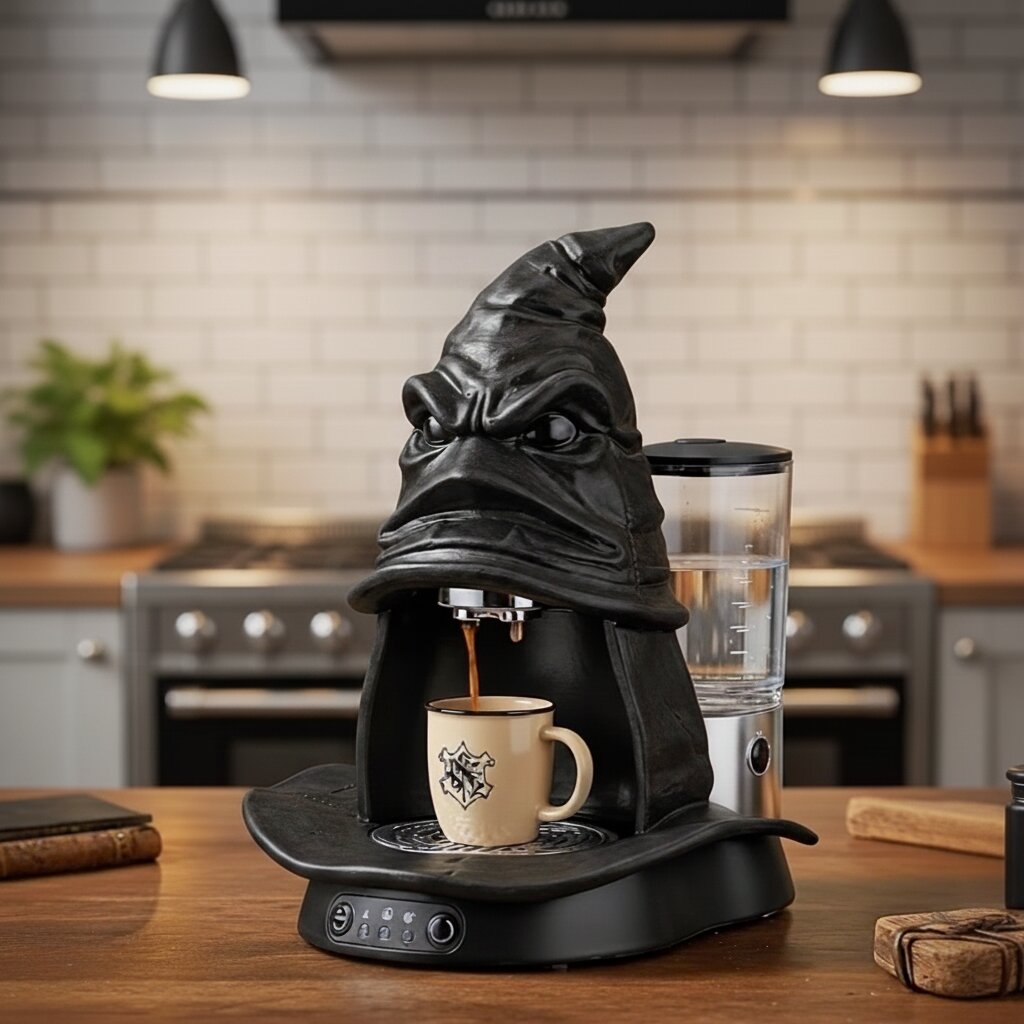
The visual identity of this coffee maker is rooted in deliberate asymmetry and organic curvature, a conscious departure from the sterile, geometric precision that dominates contemporary kitchen appliances. Rather than pursuing rigid symmetry, the design embraces the worn, lived-in quality of its namesake. The silhouette immediately evokes a wide, slightly slouched brim tapering into a softly collapsed crown. This is not a literal reproduction but an interpretive homage, where the proportions are carefully calibrated to balance visual weight with functional footprint. The brim extends outward just enough to catch stray droplets and provide a natural resting surface for a ceramic mug, while the crown rises with a gentle, irregular slope that suggests years of imagined use. The intentional lack of perfect alignment in its contours mimics the natural settling of fabric and leather, creating an object that feels as though it has already participated in countless quiet mornings.
Material selection plays a critical role in establishing this aesthetic philosophy. The exterior combines matte-finished ceramics with brushed metallic accents that mimic the texture of aged leather and tarnished bronze. These surfaces are intentionally varied; some areas feature subtle tooling marks that catch the morning light, while others remain softly diffused, absorbing rather than reflecting. This interplay of light and shadow reinforces the illusion of depth and history, ensuring that the object reads differently depending on the time of day and the angle of observation. The design avoids glossy finishes, recognizing that true character emerges from patina, tactile variation, and the subtle imperfections that signal human craftsmanship. Even the seams between components are disguised through overlapping panels and recessed joints, creating a continuous surface that reads as a single, cohesive form rather than an assembly of manufactured parts.
Spatially, the object is designed to command attention without overwhelming its surroundings. Its footprint is compact, yet its vertical presence gives it a quiet authority on a countertop or kitchen shelf. The proportions are calibrated to the human scale, ensuring that when approached, the eye is drawn upward along the gentle curve of the crown before settling back to the functional base. This visual journey mirrors the narrative act of encountering the artifact it references—a moment of anticipation, followed by quiet revelation. The design does not shout; it invites. It relies on subtlety, restraint, and an understanding that true aesthetic impact comes from harmony rather than exaggeration, allowing the object to exist peacefully within diverse interior environments while maintaining its distinctive character.

DETAILS: CRAFTSMANSHIP AND FUNCTIONAL SYNERGY
Beneath the surface narrative lies a meticulous integration of mechanical function and thematic expression. Every operational component has been reimagined to align with the object’s visual language without compromising performance or safety. The water reservoir, for instance, is concealed within the lower tier of the crown, accessible through a hinged panel that mimics the folded fabric of the brim. When opened, the mechanism reveals a precisely engineered filtration chamber, but from the outside, it appears as a natural seam in the material. This seamless concealment ensures that the user’s interaction with the machine feels intuitive and unhurried, preserving the illusion of continuity even during maintenance.
Temperature control is managed through a dial positioned along the side, designed to resemble a vintage clasp or toggle. Its rotation is deliberately weighted, providing tactile feedback that signals engagement rather than mere adjustment. Steam vents are strategically placed along the upper ridge, disguised as subtle perforations that echo the idea of whispered counsel. During the brewing cycle, these vents release vapor in controlled, rhythmic patterns, creating a visual cadence that feels almost conversational. The internal heating element operates with precision, maintaining optimal extraction temperatures while remaining entirely hidden from view. This separation of visible form and internal function is intentional; the machine is designed to feel alive without revealing its machinery, allowing the user to focus on the experience rather than the mechanics.
The drip tray and carafe interface are engineered with geometric harmony in mind. The carafe itself features a slightly tapered neck and a reinforced handle that curves outward, echoing the brim’s silhouette. Its spout is calibrated to pour without dripping, ensuring that the ritual of serving remains clean and deliberate. Even the filter basket is crafted to fit snugly within the crown’s interior, with perforations arranged in a concentric pattern that optimizes water distribution and prevents channeling. These details are not decorative afterthoughts; they are the result of iterative prototyping, where every mechanical necessity is filtered through a thematic lens. The goal is not to obscure functionality but to elevate it, ensuring that the user experiences a cohesive interaction from the moment water is added to the final drop that falls into the vessel. Every touchpoint has been considered, every adjustment calibrated, creating a machine that feels both ancient in spirit and precise in execution.

DELIGHT: THE EMOTIONAL AND SENSORY EXPERIENCE
The true measure of this object lies not in its technical specifications but in the atmosphere it cultivates. Delight, in this context, is the quiet accumulation of sensory and psychological responses that transform a routine act into a moment of presence. The brewing process becomes a meditation. As water heats, as grounds expand, as steam rises, there is a rhythmic predictability that grounds the user in the present. The machine’s operational sounds are carefully tuned; the gentle hum of the pump, the soft gurgle of percolation, the subtle hiss of escaping vapor—all are calibrated to avoid harshness, creating an acoustic backdrop that feels companionable rather than intrusive. This auditory design acknowledges that sound shapes mood, and by softening the mechanical edges of extraction, the machine fosters a sense of calm rather than urgency.
Olfactory perception plays a central role in this experience. The enclosed brewing chamber, combined with the directional flow of steam, channels the aroma of freshly brewed coffee upward and outward, ensuring that the scent fills the immediate space before the liquid even reaches the cup. This deliberate olfactory design enhances the psychological anticipation of the drink, activating memory and expectation long before the first sip. The materials themselves contribute to this sensory layer; the matte ceramics retain heat differently than metal, allowing the carafe to maintain warmth without overheating the exterior, while the metallic accents cool quickly to the touch, creating a contrast that grounds the user in physical reality. The interplay of temperature, scent, and texture transforms the kitchen into a space of mindful pause.
Psychologically, the object taps into a deep well of cultural resonance. It does not merely reference a fictional artifact; it embodies the themes associated with it: introspection, identity, quiet wisdom, and the acceptance of individuality. Every morning ritual becomes a subtle reaffirmation of these values. The act of positioning a mug beneath the spout, of watching the dark liquid gather, of inhaling the rich aroma, mirrors the narrative of waiting, listening, and ultimately understanding. This is not escapism; it is integration. The machine bridges the imaginative and the tangible, allowing the user to carry a fragment of narrative wonder into the practical rhythms of daily life. The delight it offers is sustained, not fleeting, because it is rooted in repetition, familiarity, and the quiet joy of an object that feels like it understands its purpose beyond mere utility.
THE RITUAL OF TRANSFORMATION
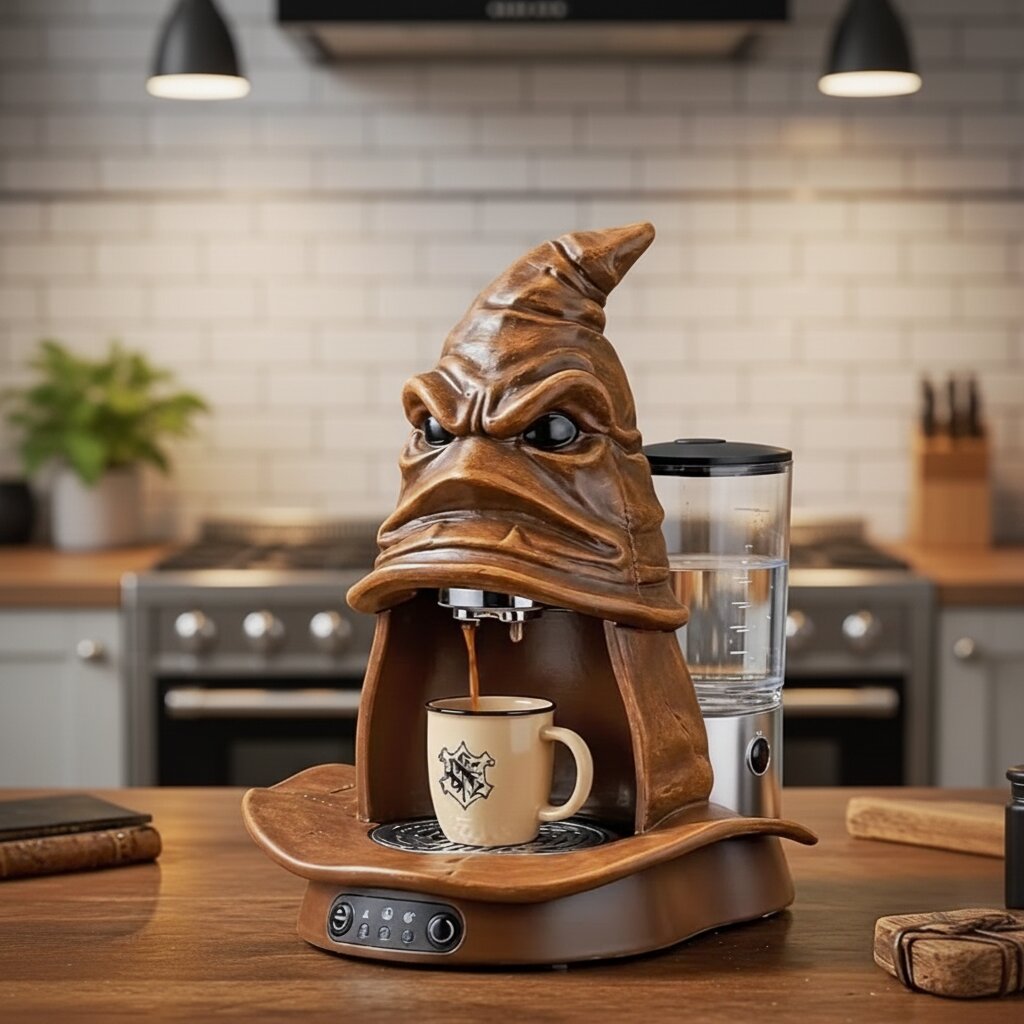
Beyond its physical and sensory attributes, the Sorting Hat Themed Coffee Maker operates as a vessel for personal ritual. Coffee preparation has always been a highly individualized practice, shaped by preference, patience, and personal meaning. When an appliance is designed with thematic intentionality, it absorbs into these practices rather than interrupting them. The machine does not dictate pace; it accommodates it. Whether the user prefers a slow, methodical extraction or a quick, efficient cycle, the design responds with grace. The tactile feedback of the controls, the visual progression of the brewing process, and the eventual presentation of the finished cup all contribute to a sense of agency and mindfulness. The object becomes a silent participant in the user’s daily architecture of habit.
This mindfulness is further enhanced by the object’s capacity to age alongside its user. Unlike disposable or trend-driven designs, this coffee maker is conceived with longevity in mind. The materials are chosen not only for their aesthetic qualities but for their capacity to develop character over time. Minor scuffs, subtle discoloration, and the gradual smoothing of frequently touched surfaces do not diminish its appearance; they enrich it. The object becomes a record of use, a quiet companion that bears witness to early mornings, quiet reflections, and the steady accumulation of days. In this way, it transcends its original purpose and becomes a participant in the user’s life narrative, mirroring the very theme it references: an artifact that grows wiser, more settled, and more deeply understood with each passing season.
The thematic resonance also extends to the social dimension of shared spaces. When placed in a common area, the machine naturally invites conversation. It does not demand attention, but its presence prompts curiosity. Guests notice the asymmetrical brim, the textured finish, the deliberate imperfections that suggest craftsmanship over mass production. These observations often lead to discussions about memory, storytelling, and the objects we choose to surround ourselves with. In this sense, the coffee maker functions as a catalyst for connection, bridging personal nostalgia with shared cultural touchstones. It proves that design can be both deeply intimate and quietly communal, transforming a solitary act into an opportunity for shared reflection.
CONCLUSION
The convergence of design, detail, and delight in the Sorting Hat Themed Coffee Maker demonstrates how everyday objects can transcend their utilitarian origins to become vessels of meaning. By carefully aligning form with function, embedding mechanical precision within thematic expression, and prioritizing sensory and emotional resonance, the object transforms a routine act into a moment of quiet reflection. It does not rely on spectacle or novelty; instead, it earns its place through consistency, craftsmanship, and an understanding of how people interact with the spaces they inhabit. In a world increasingly dominated by disposable convenience, such an object stands as a reminder that thoughtful design has the power to slow time, deepen attention, and invite wonder into the ordinary. Ultimately, it is not merely a machine that brews coffee, but a companion that honors the rituals, memories, and quiet joys that make daily life profoundly human. Through its deliberate aesthetics, its hidden engineering, and its capacity to foster delight, it proves that even the most familiar routines can become extraordinary when shaped by intention, imagination, and care.